

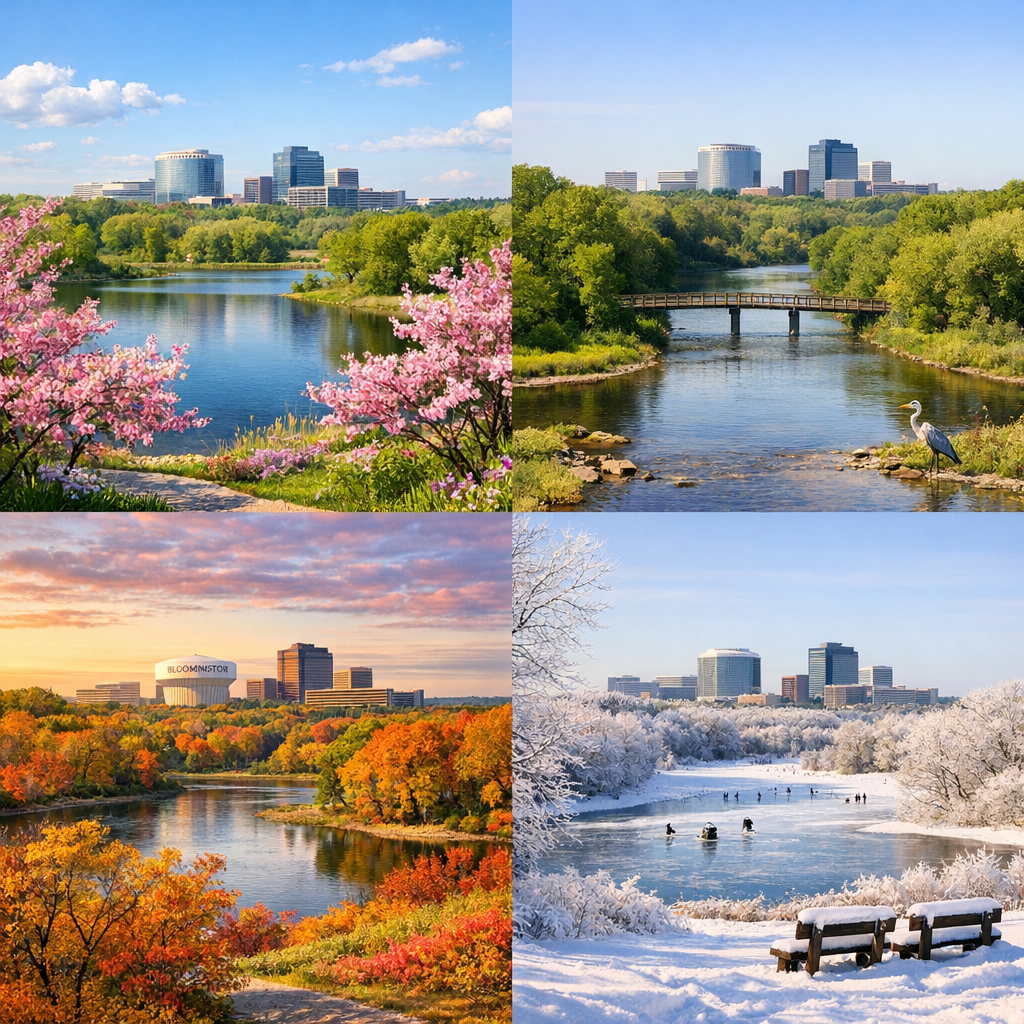
Bloomington, Minnesota, experiences a humid continental climate characterized by significant seasonal variations. Understanding these patterns can help residents prepare for and adapt to the changing environment.
Seasonal Climate Overview
Bloomington’s climate features distinct seasons:
- Winter (December to February): Cold temperatures with average lows around 7.8°F (-13.4°C) in January. Snowfall is common, and residents should be prepared for icy conditions.
- Spring (March to May): Gradual warming with average highs reaching 68.6°F (20.3°C) in May. This season often brings increased rainfall, averaging 4.25 inches (107.95 mm) in May.
- Summer (June to August): Warm and humid conditions, with average highs peaking at 82.8°F (28.2°C) in July. Thunderstorms are frequent during these months.
- Autumn (September to November): Cooling temperatures and decreasing humidity, with average highs around 58.5°F (14.7°C) in October. Fall foliage is a highlight of this season.
Environmental Initiatives in Bloomington
The City of Bloomington is actively engaged in environmental conservation and sustainability efforts. Key initiatives include:
- Climate Action Plan: Aiming for a 75% reduction in citywide energy-related greenhouse gas emissions by 2035. Strategies involve promoting renewable energy use and enhancing energy efficiency in buildings.
- Natural Resource Management: The city maintains extensive park systems and natural areas, focusing on controlling invasive species, managing over-browsing, and mitigating the effects of climate change to preserve ecological integrity.
- Water Quality Programs: Efforts to prevent stormwater pollution include regular street sweeping to remove debris and contaminants, thereby protecting local water bodies.
How Residents Can Contribute
Community involvement is crucial for the success of environmental initiatives. Residents can participate by:
- Utilizing renewable energy sources for their homes.
- Engaging in local conservation programs and volunteer opportunities.
- Practicing responsible waste disposal and recycling to prevent pollution.
By understanding Bloomington’s climate and participating in local environmental efforts, residents can contribute to a sustainable and resilient community.